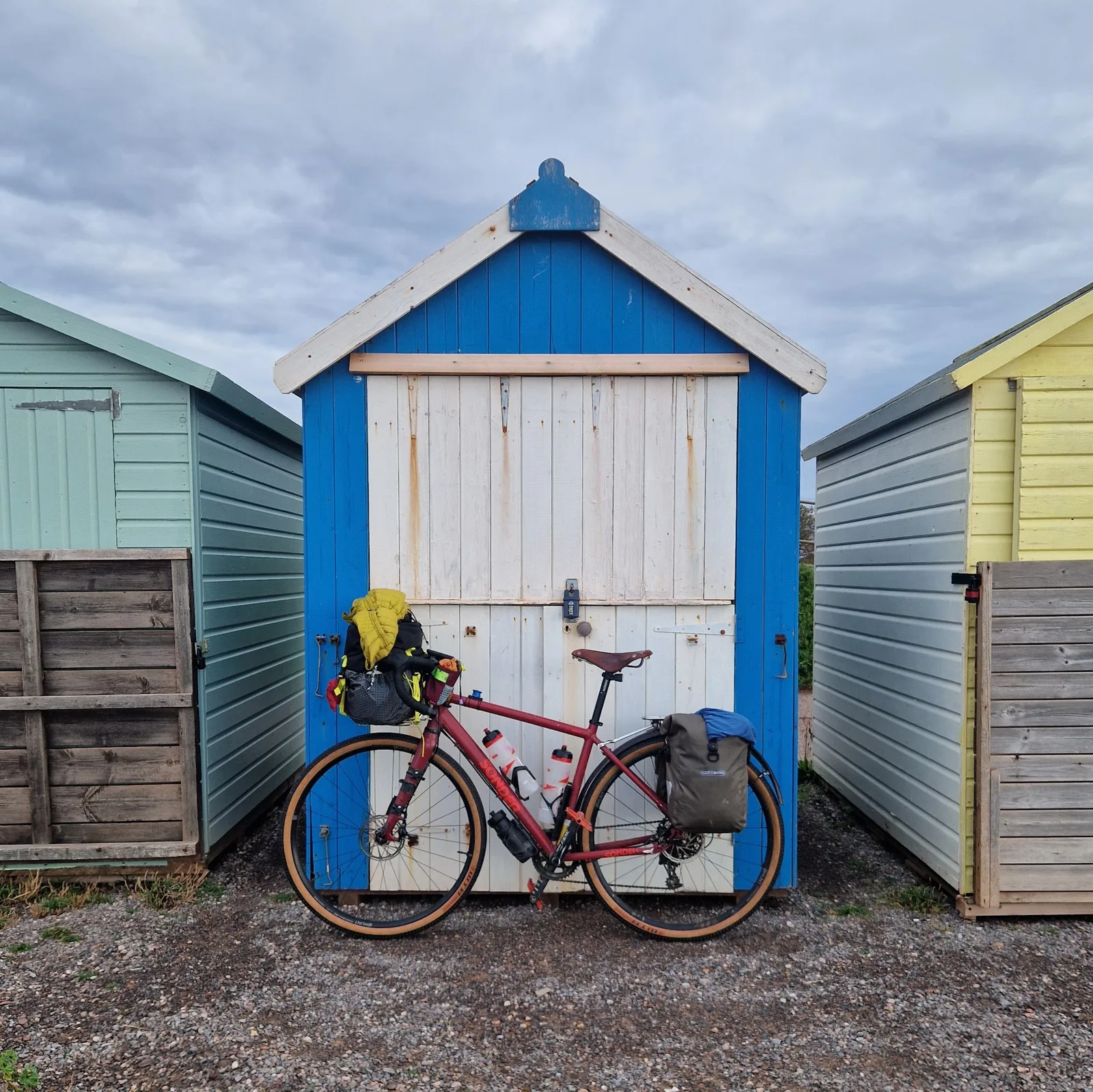
I hoped that being back on the coast would flatten the route somewhat, but alas, I was mistaken. I was no longer in Cornwall, I was in Devon, but the geology was the same.
I was on the “Jurassic Coast” a stretch of sandstone cliffs, replete with fossils from the Jurassic age. When a cliff collapses, a fossil is revealed.
This geography lesson came from a chat with a very British couple, fresh from a swim, as we warmed up with coffee.
I had been cycling down the beach, passed vividly colored beach cabins, that brought a nice splash of color into an otherwise rather dreary morning, when I realised that I had forgotten to fill my water bottles.
Serendipity!
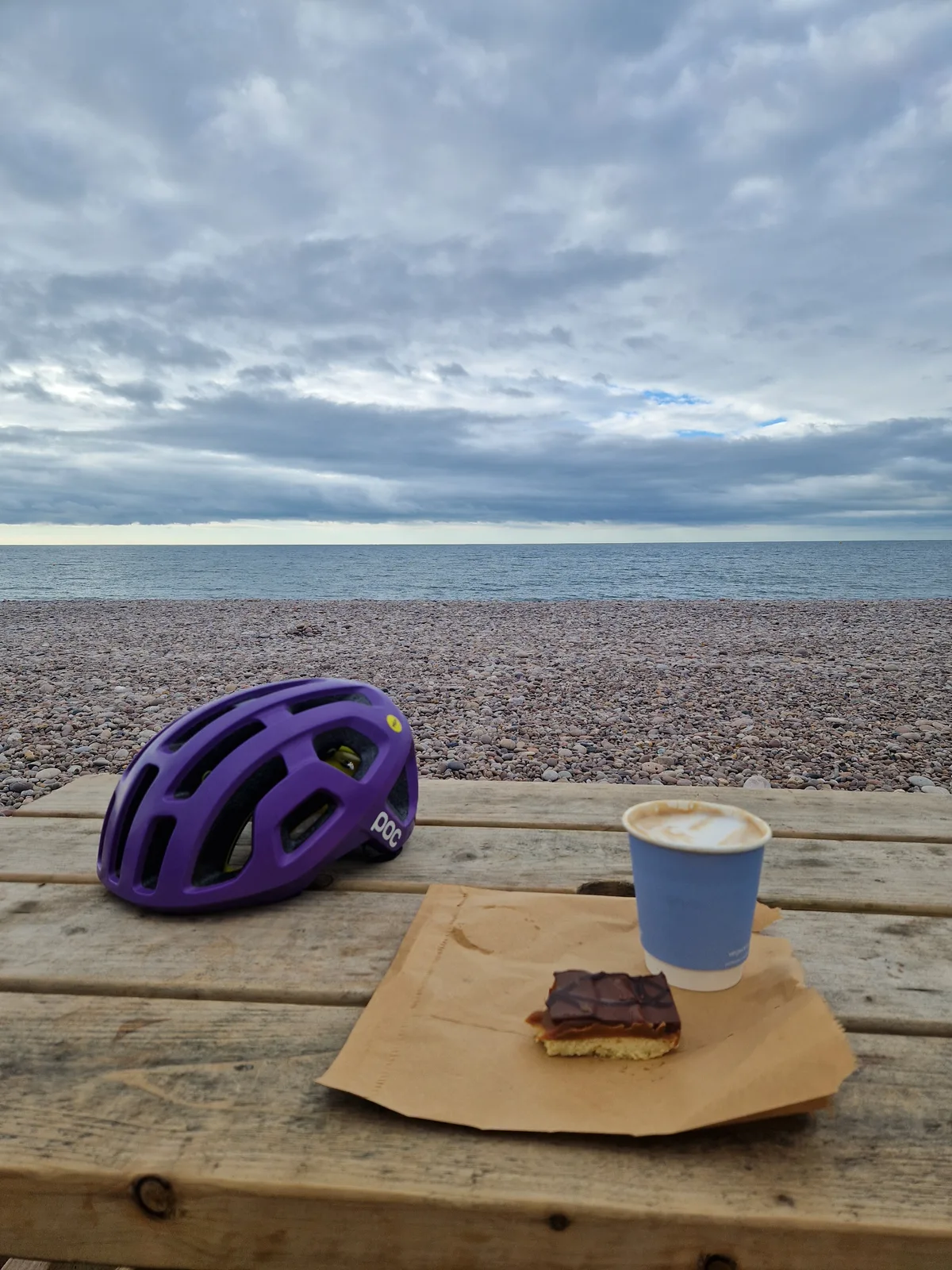
I stopped at a beachfront cafe to ask for water, when I spotted something on a shelf: a “Mllionaire’s shortbread”. A shortbread base, covered with a layer of gooey caramel and topped with a protective slab of chocolate. I’d been looking for one of these on-and-off since I had landed in England.
I hadn’t planned on stopping, but serendipity struck. This would be my mid-morning break.
as I enjoyed a “millionaires shortbread” (shortbread, caramel, and chocolate stacked in a calory extravaganza). I’d stopped to ask for a refill for my water bottles, but the sight of cake, waiting for me, on a shelf had changed my plans. I’d been looking for one ever since I landed on this island.
Warmed by a coffee, and envigorated by this sudden jolt of sugar, I was back on the road. My first objective was Sidmouth. I’d hoped to reach it yesterday but Dartmoor had gotten the better of me.
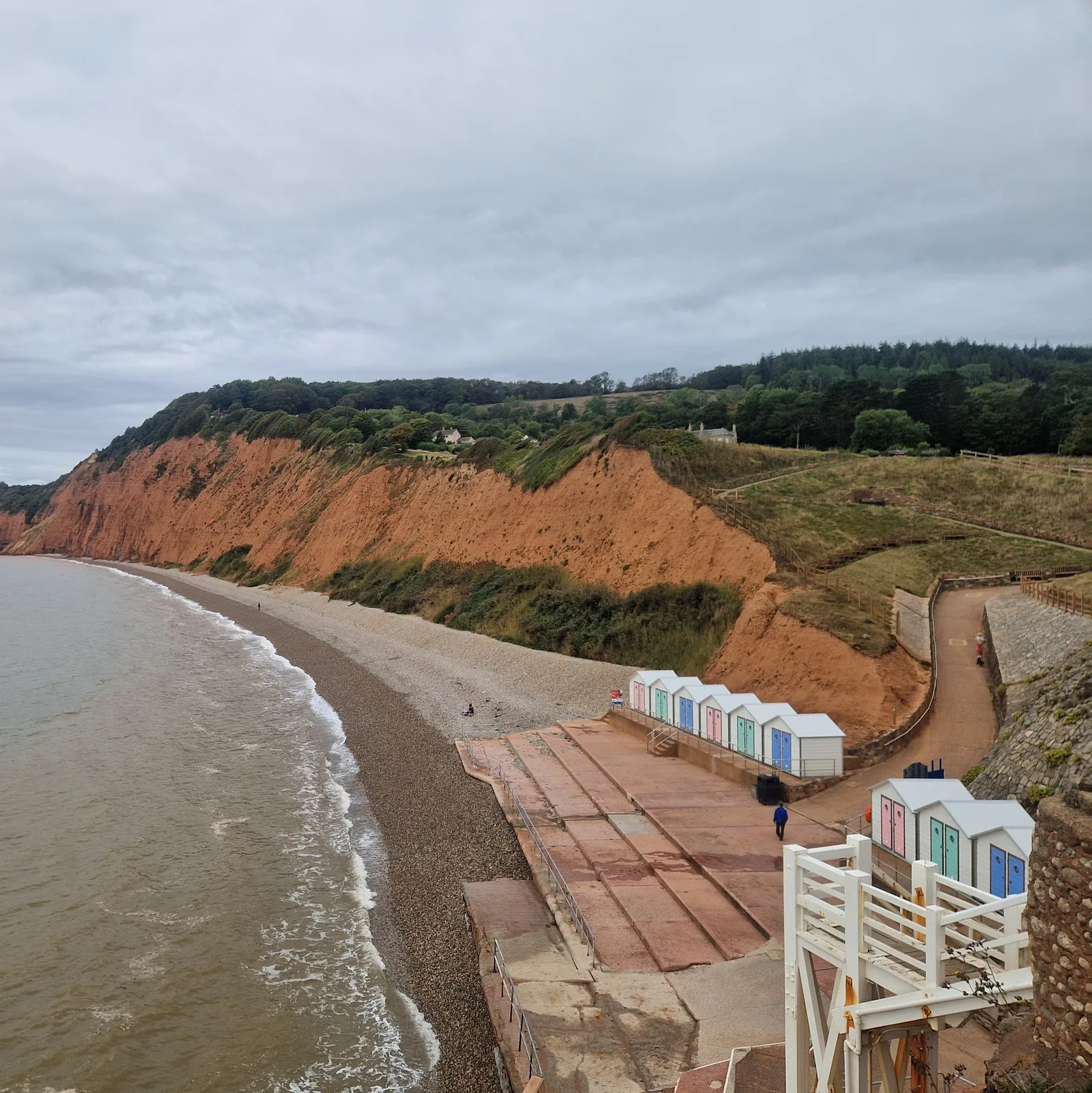
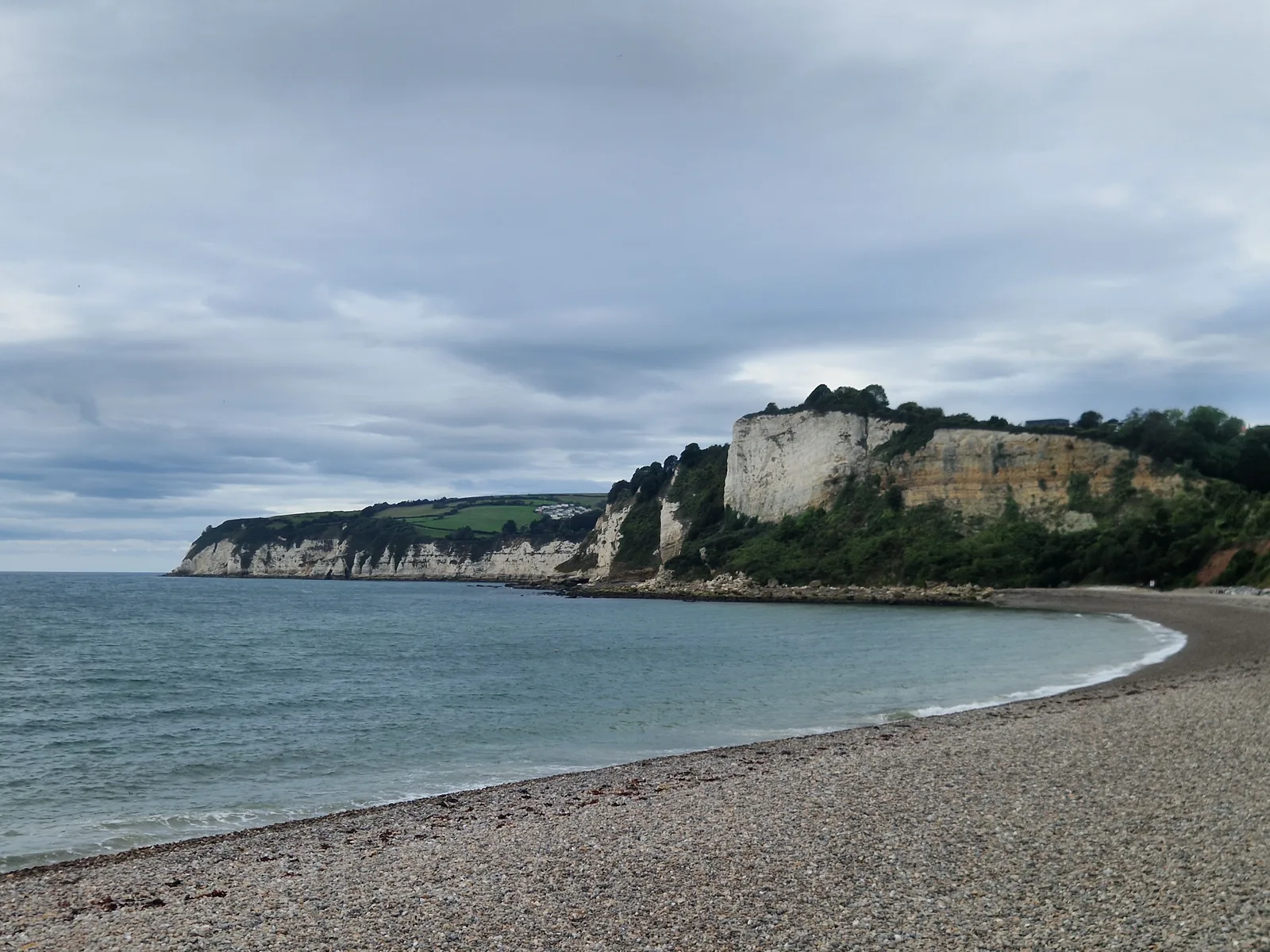
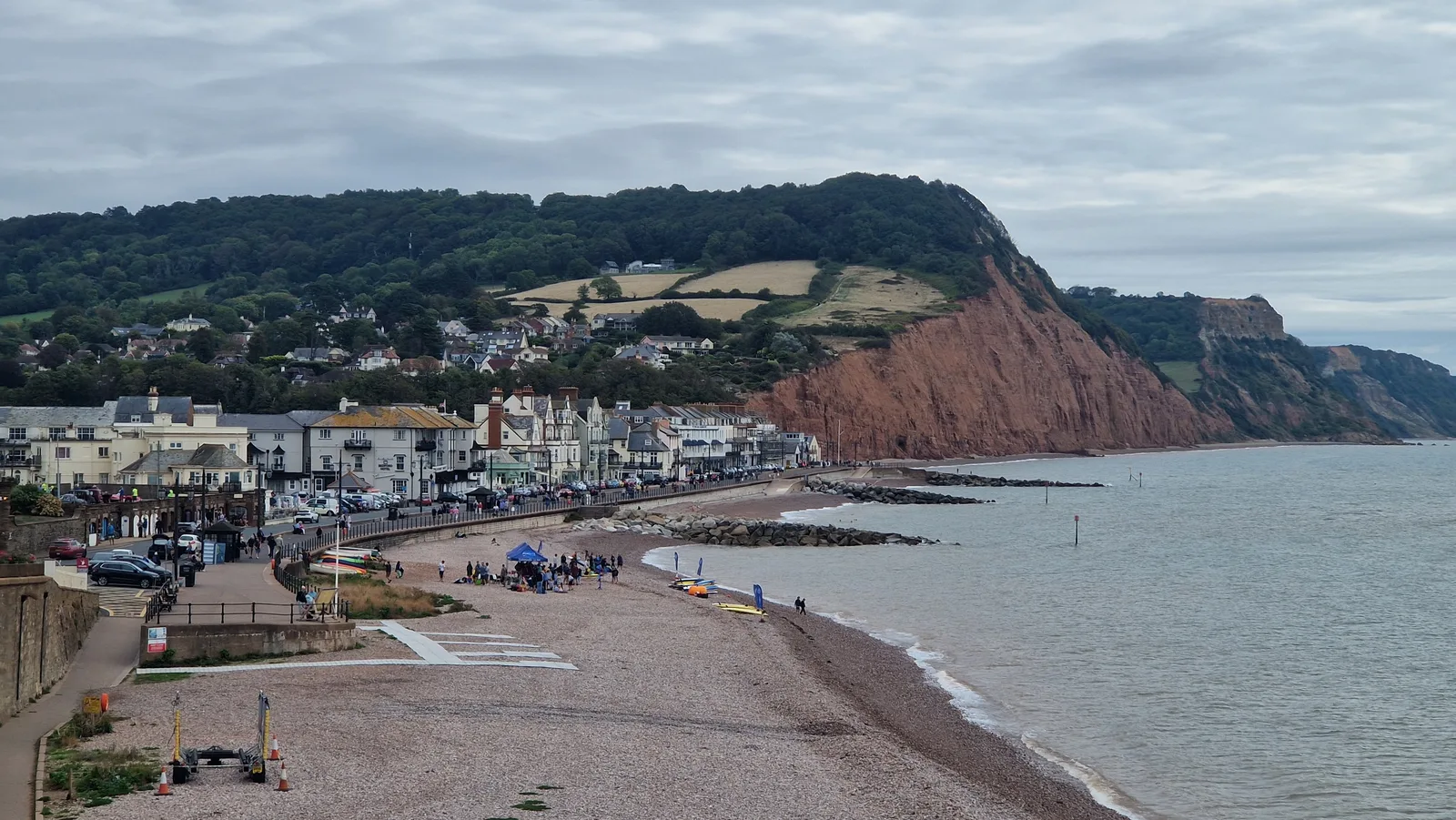
The road was ups and downs. The ups were long, but not as steep as they had been just yseterday. I managed to pass most crests with my bum firmly seated in the saddle, but I did sweat abundantly each time. The going was easier, not easy. The sun was starting to peek out from behind the clouds, so the downhills gave me a chance to dry off before the next climb.
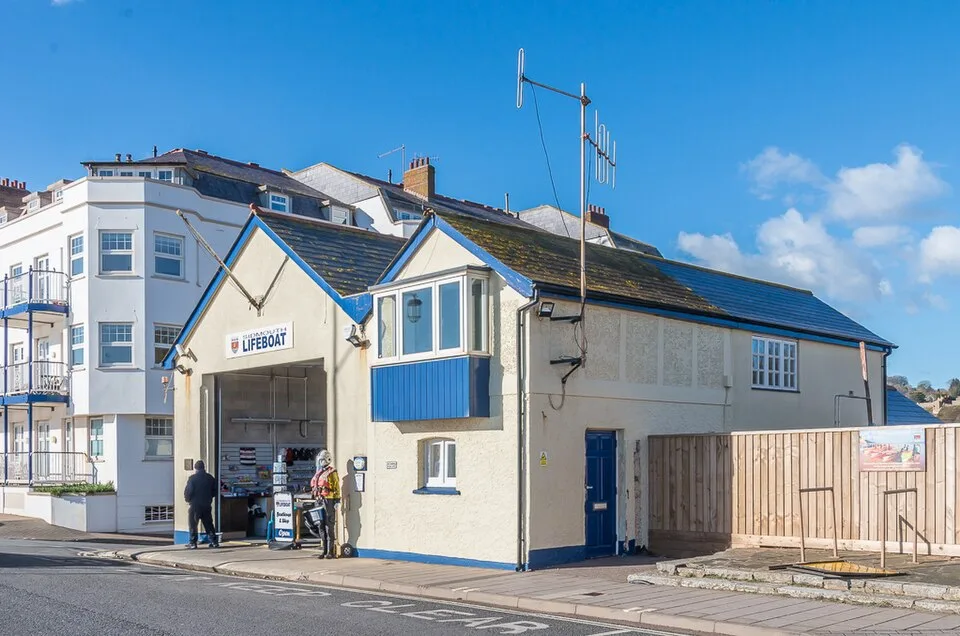

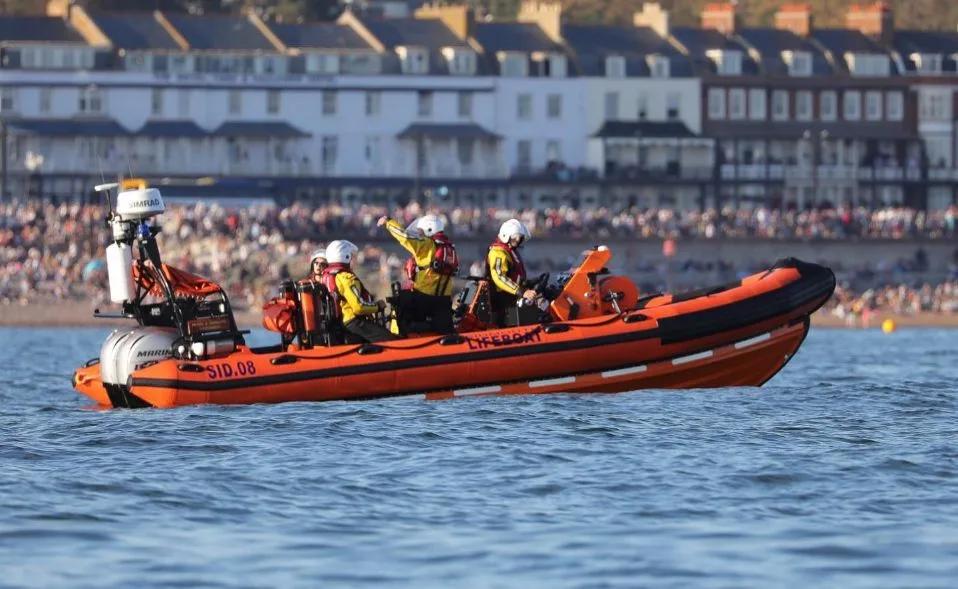
Sidmouth Lifeboat
In Sidmouth, I passed by the lifeboat station. The door was open, and inside the boathouse, I could their “Arctic 24” lifeboat, on it’s trailer, waiting to be called into action.
A peculiarity of England is that a lot of services that I would expect to be state funded, are charities. Take air ambulances: in France, if you need to be evacuated to a hospital in a helicopter, a yellow and orange civil protection helicopter will be dispatched.
The Sidmouth lifeboat is another charity. Some volunteers man the boat for rescues, other man the shop to raise funds, and cover running costs. The volunteer manning the shop becconed me in, and took the time to tell me all about the the boat, the crew, and the tractor to push it into the water.
This boat is fascinating. It’s actually derived from a special forces boat. It has a crew of 4, can self-right if it ever capsizes, and has all the navigation equipment to venture 20 nautical miles (approximately 40 km) off-shore. That’s more than the 12 nautical miles of territorial waters! Two 150 horse-power engines propel it at up to 48 knots (nearly 90 km/h)!
Missing Beer
I debated stopping for lunch, but I really wanted to reach Lyme Regis. It marked the end of Cornish adeventures, and the start of the Old Chalk Way, a well known gravel-centric bikepacking route. In my mind, it was the end of this phase of the route, and the start of a more fun, off-road route.
The Old Chalk Way adapts the Great Chalk Way, the oldest coast-to-coast hiking trail in the UK, to cyclists. The route follows a chalk ridge, avoiding towns, and staying as deep in the countryside as possible.

Lyme Regis
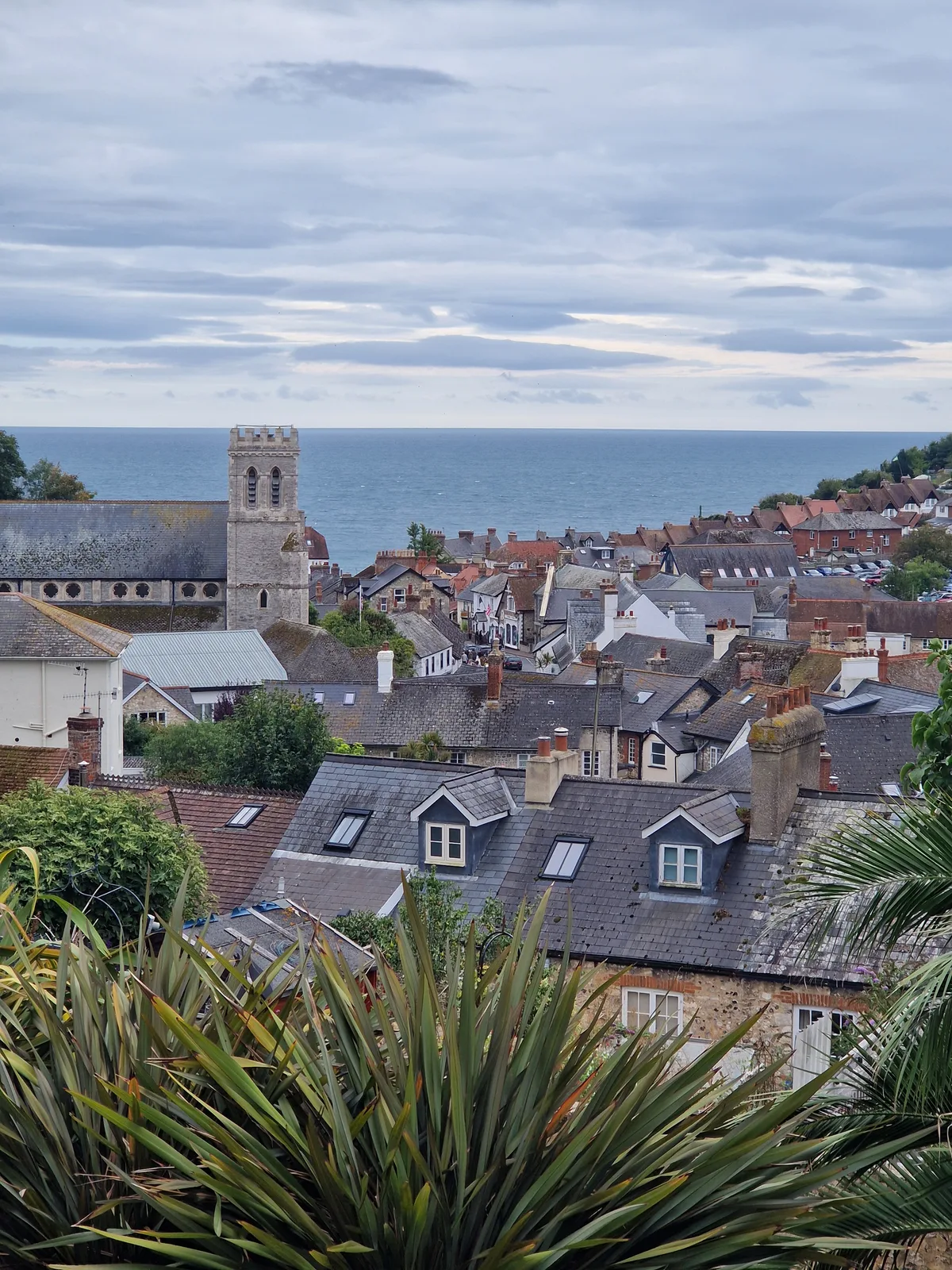
Lyme Regis was still several climbs away, but the result was an utterly spectacular view onto the town from the hillside, and a long, too long, descent to the beach. All the way though, I knew that I would have to climb back out later…
It’s hard to enjoy something when you know that every second of pleasure you get from the experience means minutes of suffering on the other end.
Lyme Regis was a hotbed of activity and tourism. People crowded the shopping streets, the sea front, the port, the beach, …
I looked for a pub, or a chippy for a meal, but they were all chock full. If I wanted a meal, I would have to go indoors and leave my bicycle, laden with all my luggage outside, so I continued my exploration.
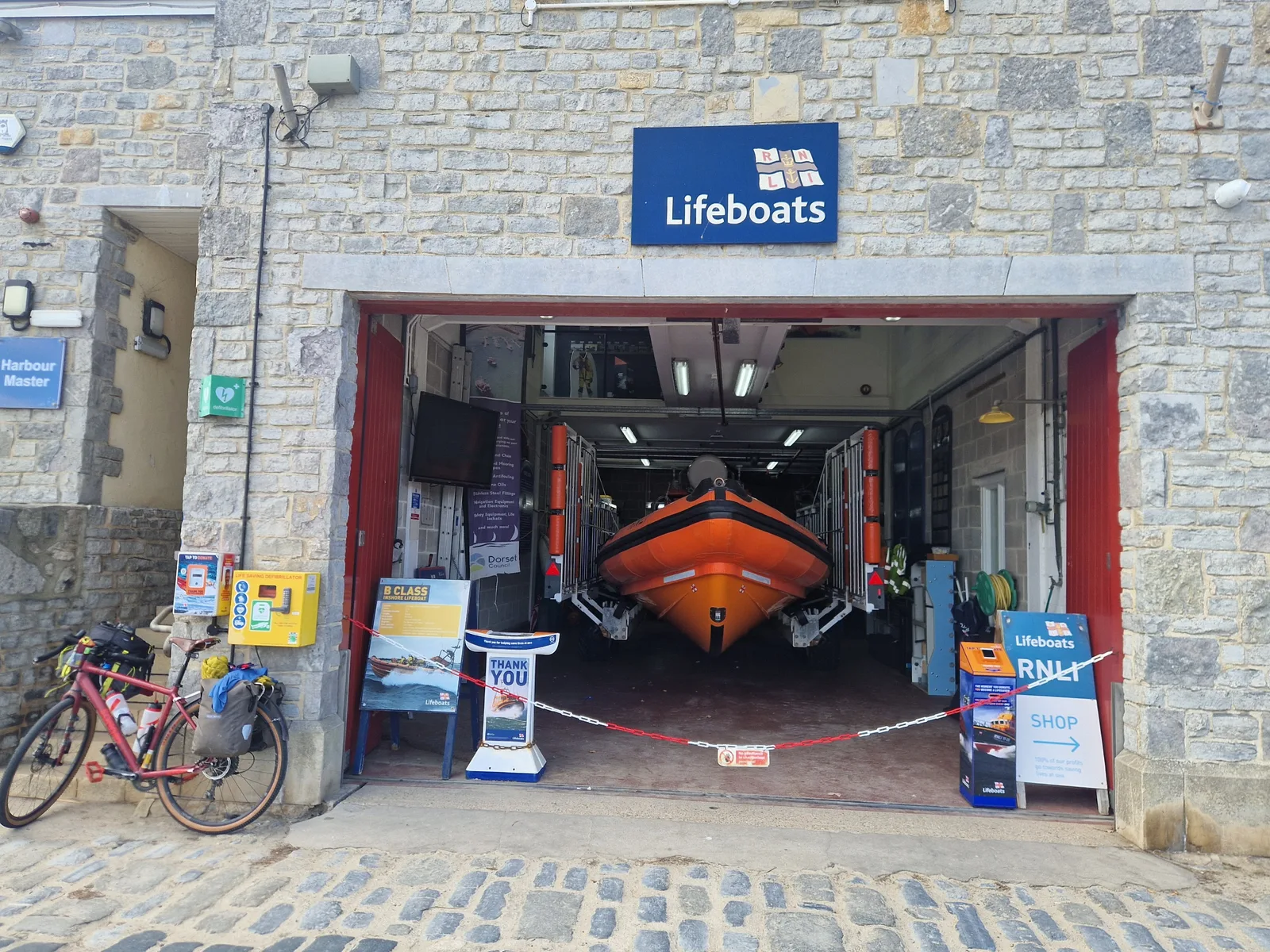
At the far end of the harbour, the Lyme Regis Lifeboat station was open, and the nose of a lifeboat was peeking out. As I was propping my bicyle up against the wall to take a picture, a volunteer invited me in for a closer look.
For the next twenty minutes, they walked me through the boat, the crew, the equipment, and the life at the station.
This station is affiliated with the RNLI (Royal National Lifeguard Institution). A very well funded organisation with top-notch equipment. This station has an Atlantic 85, a boat similar to the one in Sidmouth, but designed from the ground up to be a lifeboat.
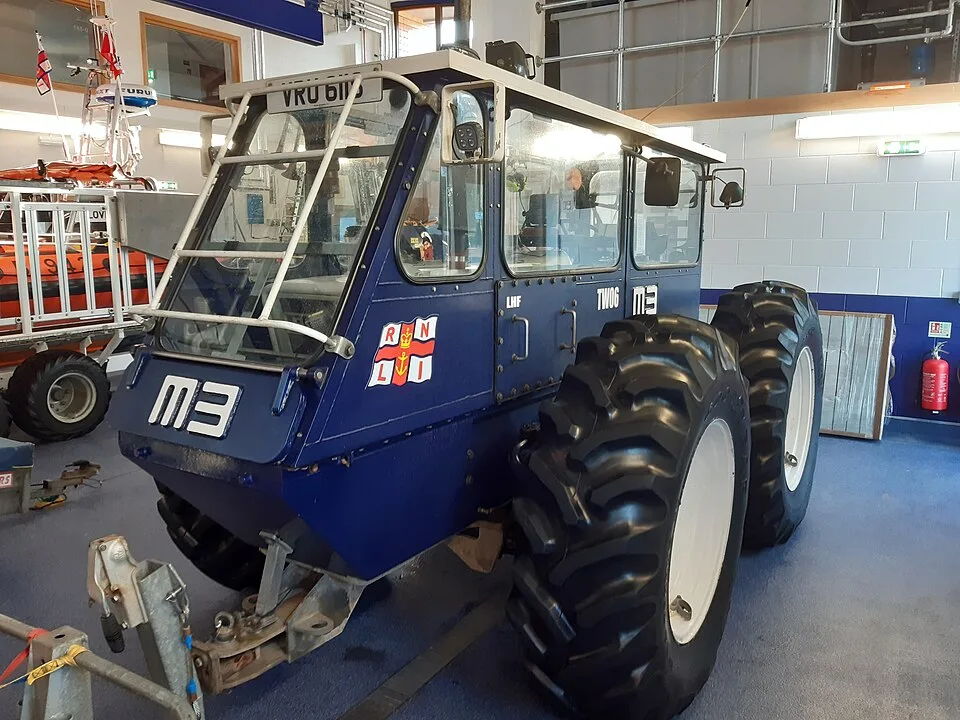
The tractor used to push it into the water may have been even more impressive than the lifeboat. It is designed specifically for the RNLI by Clayton Engineering. To control costs, they built around an existing tractor, but needed to make sure that it can wade into deep salty water. The solution was to encase the tractor in a watertight bathtub, with large windows.
The tractor needs large wheel to not sink into the sand, but large tyres are buoyant. To counteract this, the tyres are filled with one ton of water each. The extra ballast is countered by the sheer size of the tyre, and the ground pressure is low enough that the tractor doesn’t dig itself in.
The reaction time of the crew is even more impressive. In seven minutes after being paged, the volunteer crew can be on the boat ready for action.
A quick stop at the gift shop, and a pair of branded socks later, I started the climb out of Lyme Regis.
What I need, when I need it
I had failed to find anywhere for lunch that wasn’t absolutely overcrowded, and I started worrying that my lunch would be whatever snacks I had on me …
Fortunately, at a turn in the road, I passed a sign for a “Tea Garden” offering “light lunches”. This would do.
At a table, in the large garden, I pulled out my battery pack to charge my phone. It was empty. I pulled out my second battery, it was on its last legs. I really needed to charge them. In the meantime, I need to save power.
There’s something scary about being so utterly tethered to my phone, yet not having any backup if it fails. I need it to locate campsites, and grocery shops to resupply. Without it, I’m bound to the yellow line on the GPS, hoping to pass by the services I need when I need them.
The Old Chalk Way
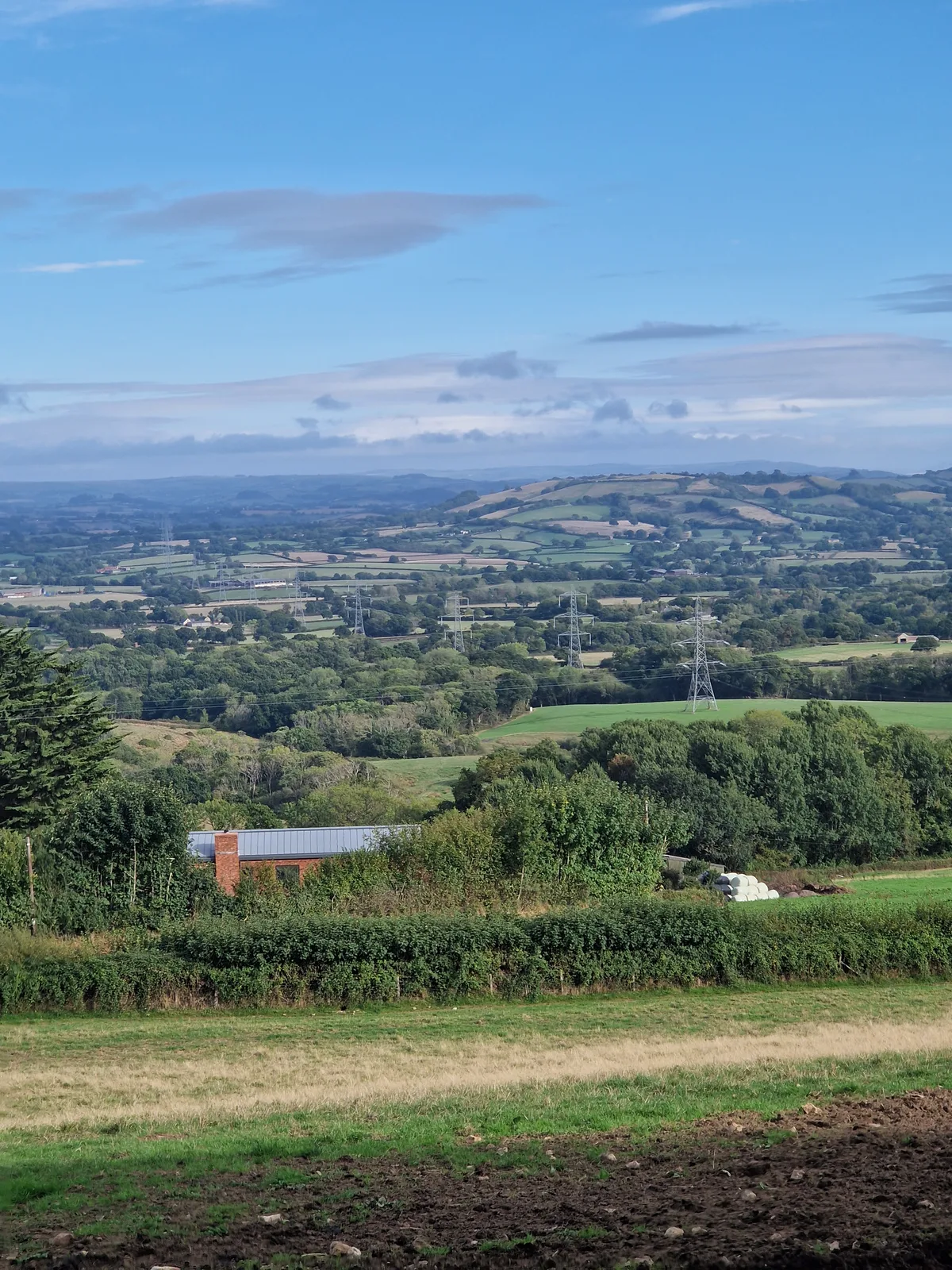
My new route has significant off-road portions. Some nice single track and gravel roads, but also climbs and descents on rocky paths repairs with large misshapen rocks. My progress was slower than I had hoped for.
There was also more elevation than I had hoped for. Somehow, it seemed that wherever I went, I was on the only hill in the region. After each descent, a new hill appeared, a new challenge to conquer.
Crest after crest, 1000 metres of elevation became 2000 … I could feel my strength waning.
Had I done a bit more planning, or even paid more attention to the signs I was following, I would have learned that I was on the “Essex Ridgeway”, so I would be following the ridges. By definition, I would always be on the tallest hill.
Finding Accommodation
The route was challenging. It seemed to favour barely praticable forest paths. When they were flat, I could pick my way through, when they climbed, I had no choice but to push my bicyle up.
I was barely making progress, and I was getting tired. I tried checking the map, looking for a cheap hotel, but I was too far from anything for that. There were a couple of pubs with accommodation, but nothing remotely close to my budget.
I checked for campsites around me and immediately found one. It just happened to be on top of a hill.
Sweaty and out of breath, just as the sun started setting, I reached the campsite just as night fell, located the manager, and my made my way to my pitch.
A friendly neighbour let me plug in my charger in their caravan. I plugged in my phone and felt grew worried. It wasn’t charging. We tried another outlet, another cable, but it still would not charge.
If my phone died, I would be in hard place. I forced myself to stop and think. What could cause it to not charge. I knew the charger worked, my power bank was charging. I knew the cable worked, I’d swapped with the power bank a minute ago. The fault was clearly on the phone side.
I had noticed that the the USB cable was not clicking in properly when I plugged it into the phone. I wodnered if a buildup of gunk was preventing the cable from connecting properly.
Under the light of my headlamp, with a safety pin, I scratched around in the connector. I was worried of actually breaking the connector, but I didn’t have any other ideas. Under the light, I could see the tip of the pin dislodge compacted dirt. After a few minutes, I’d removed enough that the phone was charging again. Barely, but that would do for today. I wasn’t taking any risks.
I left my phone to charge and went back to my tent. I needed a shower!
By the numbers
- Ride Started
- 08:40
- Ride Ended
- 19:46
- Distance
- 110 km
- Time Moving
- 7h 28m
- Time Elapsed
- 11h 06m
- Elevation Gained
- 2285 m
- Distance so far
- 1465 km
- Riding so far
- 86h 05m
- Elevation so far
- 16741 m