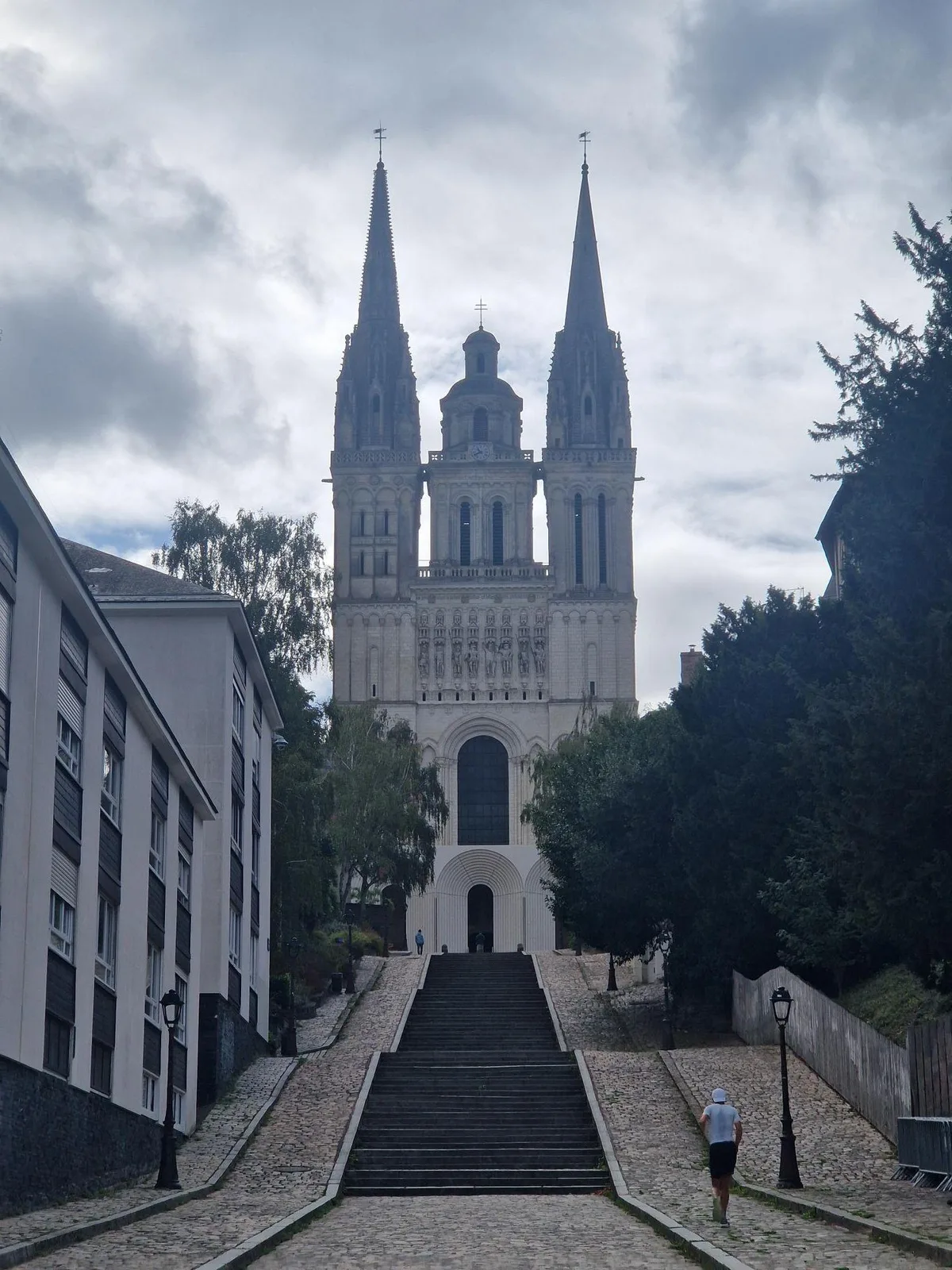
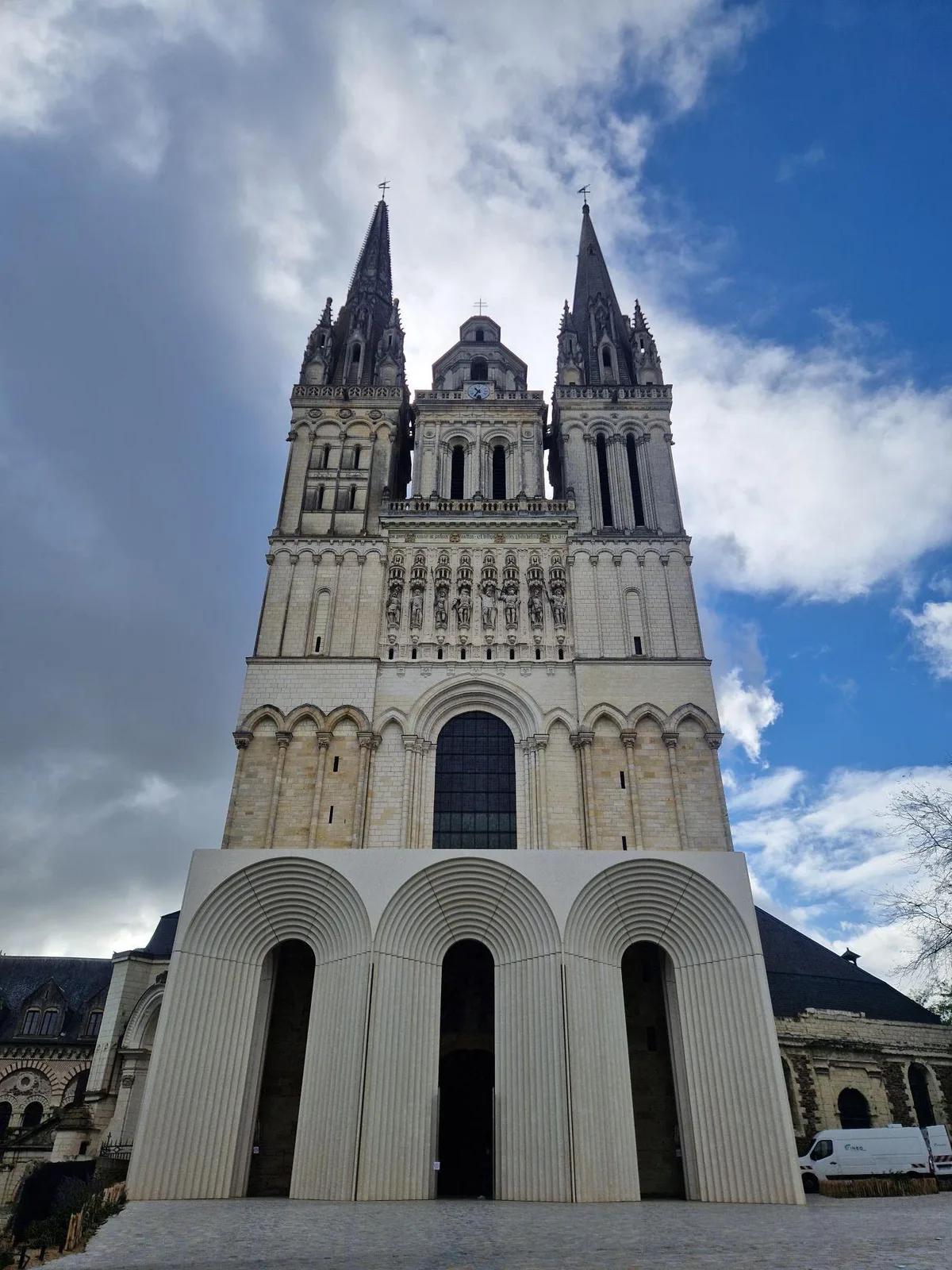
Before I can start my trip, I’ve been convinced that I need to see the new “Narthex” the cathedral in Angers.
The doors of the Cathedral were originally painted in colorful tones. Over time the pigments wore off, and a restoration effort was kicked off. What should have been simple became complicated when the team discovered that what they thought was the original paint, was in fact a 17th century restoration.
This posed a problem because the “The Venice Charter for the Conservation and Restoration of Monuments and Sites”, the international treaty that governs building restorations, dictates that restoration works cannot favour one era over another. Faced with two distinct works (the original work, and the more recent restoration) the team was not allowed to pick one and erase the other. All they were allowed to do was preserve what was left. And herein lies the next issue.
To preserve the remaining paint, it needed to protected from light, but the same Venice Charter states that any new additions to the building must be clearly new. Historical records showed the existence of a Narthex (a covered porch in front of a church), but did not provide enough detail to reconstruct it as it would have been.
Left with no other choice, they needed to erect a fundamentally modern structure on an fundamentally ancient cathedral. A design by superstar architect Kengo Kuma won the design contest, and the new structure was unveiled in April 2026, just a few months ago.
It has not been without controversy, but understanding the challenge helps to understand the solution.
Revolutionary Absolutism
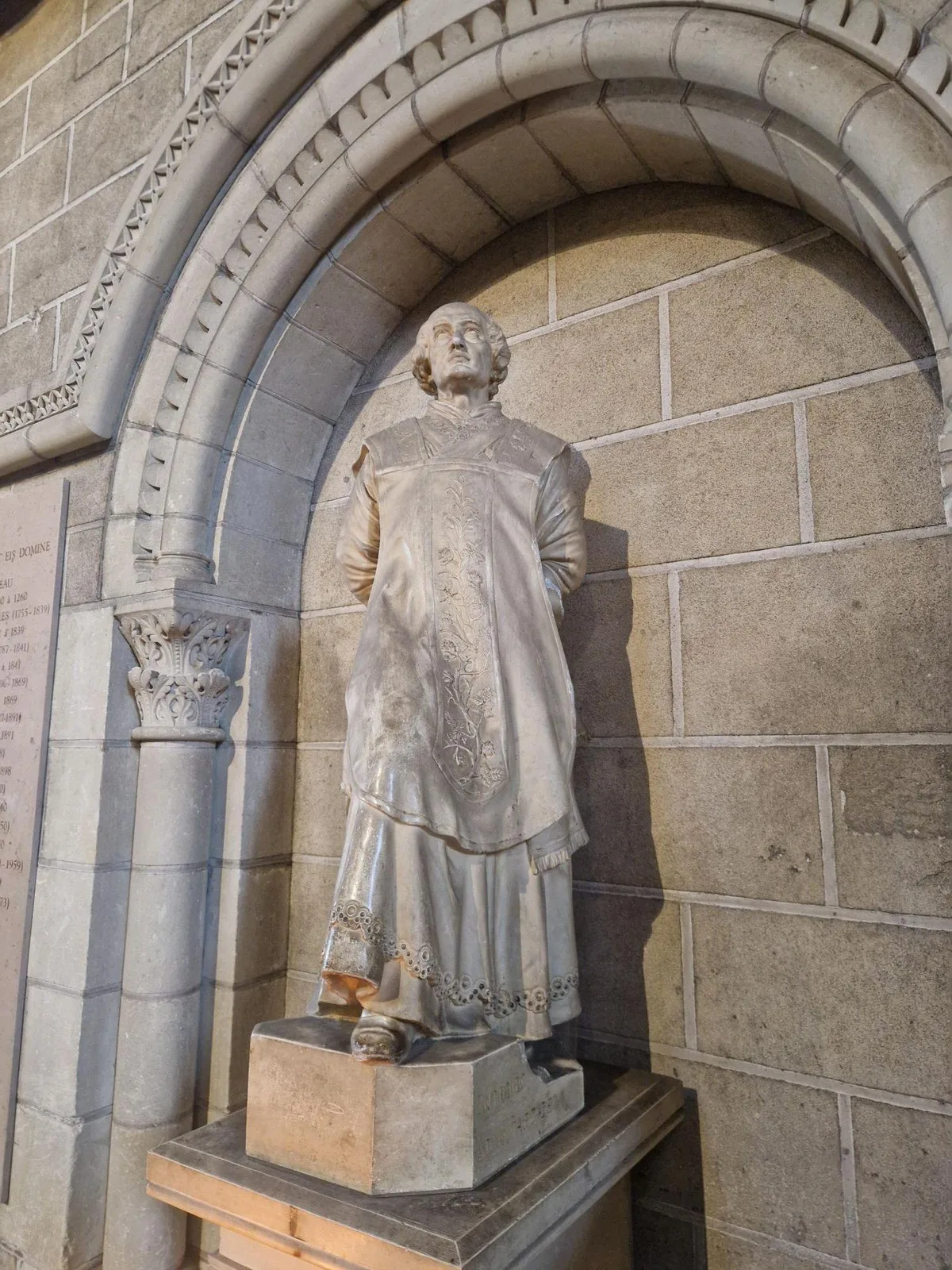
Inside the cathedral was a small placard detailing the life of a martyr. I expected the usual story of a saint thrown to the lions in a colosseum, but the date was wrong. He was killed in the aftermath of the French revolution.
To bring the church under control of the new secular order, the properties of the church were seized and the new authorities required priests to take an oath to the new constitution. Noel Pinot (since beatified) refused and was imprisoned. Freed he returned, dressed as a peasant to preach. Betrayed, he was arrested again, and sentenced to a more permanent fate: the guillotine.
From Anjou to Lorraine
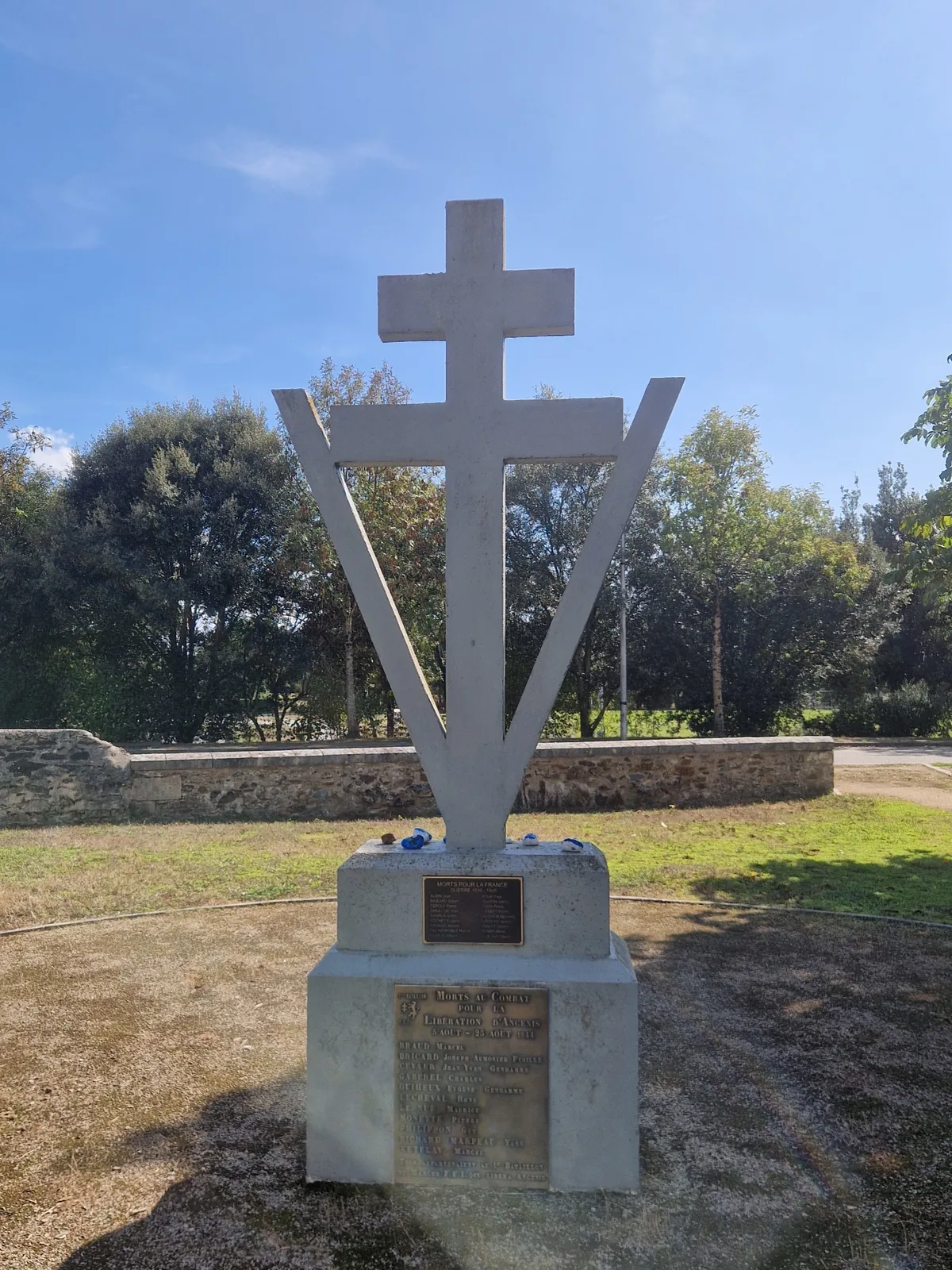
A small sign in a corner teased a big reveal about the origins of the “Croix de Lorraine”, the emblem of the “Forces Francaises Libres” (or FFL, the free french forces fighting longside the allies in the second world war).
In 1244 Jean d’Alluye returning from the Poet’s Crusade received from a bishop in Crete a fragment of the cross of Jesus Christ. This fragment had been scuplted into what we now know as the Cross of Lorraine. A cross with two horizontal crossbars. The upper, narrower, crossbar held the text “Jesus of Nazareth King of the Jews”.
Upon his return, to repay the debts incurred to fund his campaign, Jean had to sell the fragment, but kept it on the family seal. It became the emblem of the Dukes of Anjou.
In 1420, René d’Anjou, gifted his seal to his wife Isabelle of Lorraine as a wedding gift. The Croix d’Anjou, became the Croix de Lorraine. Through history, and victories, it became a symbol of French nationalism, exalted when Alsace and Lorraine fell under Prussian, then German control.
To learn more about the history of the symbol, une fois n’est pas coutume, the French Wikipedia entry is far superior to the English wikipedia entry.
By the numbers
- Ride Started
- 11:59
- Ride Ended
- 19:02
- Distance
- 111 km
- Time Moving
- 5h 39m
- Time Elapsed
- 7h 02m
- Elevation Gained
- 424 m
- Distance so far
- 111 km
- Riding so far
- 5h 39m
- Elevation so far
- 424 m